
Pilates for Back Pain: How to Start Safely
When movement helps and when you need a doctor first, what the research actually says about pilates for low back pain, and how to start safely.
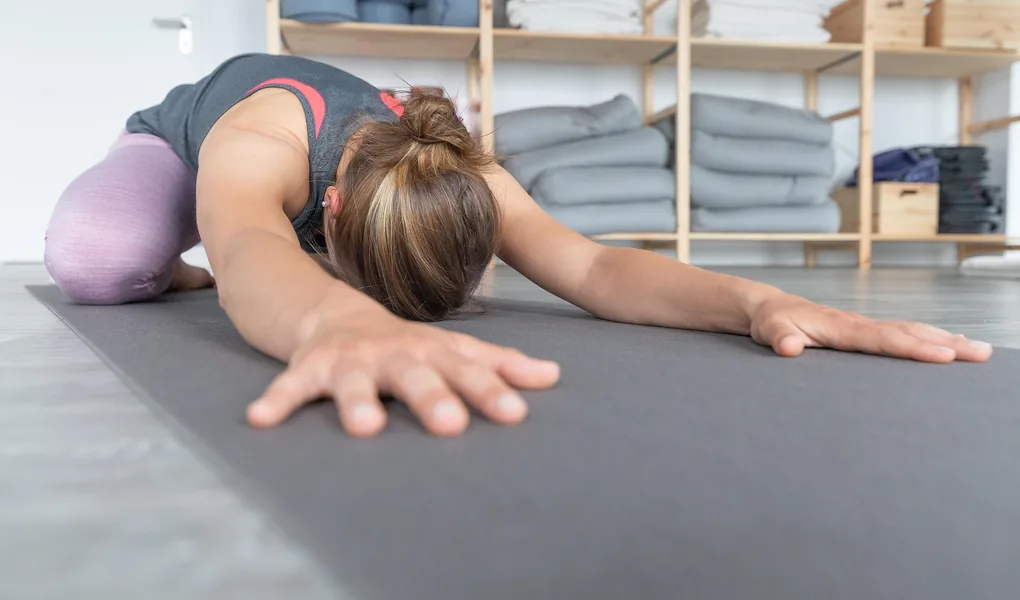
People often come to me with the line «I was told to protect my back», and behind it there's almost always the same fear: that moving will make things worse. It's the most common mistake I've seen over many years of practice.
In reality, for most back pain movement isn't the enemy - it's part of recovery. But the word «safely» is the key one, and safety doesn't start with exercises. It starts with two simple questions: are you actually cleared to get on the mat right now, and where exactly should you begin.
First - when pilates should wait
There are situations where you need a doctor before any exercise, not a trainer. Warning signs include: pain after a fall or trauma; numbness, weakness, or shooting pain down a leg; loss of bladder or bowel control; unexplained weight loss, fever, or night pain that wakes you from sleep; back pain with a history of cancer.
These signs are rare, but they're exactly why I always ask about the history of your pain before a first session. If none of them are present - and in the vast majority of cases they aren't - we can almost certainly work with movement.
Why rest almost always loses to movement
Twenty years ago the standard advice for low back pain was bed rest. Research turned that advice on its head. The most convincing evidence comes from so-called Cochrane reviews: independent researchers pool dozens of separate studies and weigh them together, which is why evidence-based medicine treats these reviews as one of the most reliable sources - more reliable than any single study.
One such review compared «rest in bed» with «stay active» for acute pain and showed that staying active gives a small but consistent advantage in both reducing pain and restoring function. Lying down isn't just useless - it's worse.
A major series of papers in The Lancet (2018) cemented this approach as the international standard: staying active and moving is recommended for both acute and chronic pain, while prolonged rest, unnecessary imaging, and passive treatment tend to do more harm than good.
What the research says specifically about pilates
A dedicated Cochrane review on pilates itself (Yamato and colleagues, 2015) pooled ten studies and concluded that pilates reduces pain and improves function better than minimal intervention - with low- to moderate-quality evidence.
Here I'll be honest right away: that same review found no convincing evidence that pilates is better than other forms of exercise. And that, oddly enough, is good news. It means there's no single «magic» method - what works is the activity you'll actually do consistently. A broader review of all types of therapeutic exercise for chronic pain (Hayden and colleagues, 2021) confirms this: exercise as a whole reduces pain and improves function, and the specific format is a matter of preference and what suits you.
So why I still suggest starting with pilates
If all exercise is roughly equal in effect, the choice comes down to how safe the start is and how easy it is to stick with. Here pilates is strong: the load is dosed in small steps, there's no impact or jumping, and there's clear control of body position.
We're not «doing crunches» - we're teaching the deep trunk muscles to switch on at the right moment, so the spine has support in everyday movements. That kind of movement control - what researchers call motor control - consistently performs well for low back pain in the reviews.
Pain doesn't always equal damage
There's one more thing I always explain at the start. In chronic pain, the intensity of the sensation often doesn't match the state of the tissues: the nervous system can become «more sensitive» and send a strong signal where there's no longer any real damage.
The practical takeaway isn't «endure any pain» - it's the opposite. Moderate discomfort while learning a new movement is acceptable. But sharp, shooting pain, or symptoms that build up after a session, are a signal to stop and change the exercise. The rule of thumb is simple and the same one I give everyone: you should feel lighter after practice, not worse.
What we actually start with
The first sessions look completely unimpressive, and that's on purpose. We work with breathing - deep, diaphragmatic breathing that releases some of the tension on its own; we find a neutral pelvis position; we do gentle spinal mobility like cat-camel and careful pelvic tilts.
In parallel, we switch on the deep abdominal muscles and the glutes - the support the back most often lacks. No forcing range, no records. The goal of the starting period is to give the body back control and confidence in movement, not to exhaust it.
What to avoid at the start
In the first weeks I take loaded twists and deep flexion-through-pain out of the program, along with jerky trunk rotations, long holds that bring symptoms back, and any «grit your teeth» exercises.
It's not forever - many of them return later, once you've built a base. But early on the cost of a mistake is too high: one sharp flare-up sets you back weeks and, worse, brings back the very fear of movement we started from.
How much and how often
Here we can lean on concrete numbers. In a study by Brazilian researchers (Miyamoto and colleagues, 2016), two pilates sessions a week were enough to reduce chronic low back pain - three gave no additional advantage for pain relief specifically.
So for starting out with pain, I usually recommend two short sessions a week plus, if you like, a few minutes of breathing and mobility on the off days. Consistency matters more here than the length or intensity of any single session.
When to expect changes
The first thing to go isn't the pain - it's the fear: within a few sessions most people notice that movement doesn't make things worse, and that alone lowers the tension. A noticeable drop in stiffness usually comes within two to four weeks of regular practice.
Lasting improvement in function - the kind clinical trials show - unfolds over six to twelve weeks. It isn't fast, but that's the horizon over which the back genuinely changes, rather than just «easing off for a day».
The bottom line
Back pain rarely calls for rest - more often it calls for correctly dosed movement. First we rule out the red flags, then we start with breathing, control, and the deep core, avoid the sharp and heavily loaded, keep to two sessions a week, and measure progress in weeks, not in a single session.
Pilates suits this start well not because it's «magic», but because it's controlled, safe, and easy to turn into a habit. And it's the habit, not the intensity, that gives the back back its freedom to move.
Sources
- Yamato et al. Pilates for low back pain (Cochrane review), Cochrane Database of Systematic Reviews, 2015
- Hayden et al. Exercise therapy for chronic low back pain (Cochrane review), Cochrane Database of Systematic Reviews, 2021
- Foster et al. Prevention and treatment of low back pain (The Lancet series), The Lancet, 2018
- Dahm et al. Advice to rest in bed versus stay active for acute low back pain (Cochrane review)
- Miyamoto et al. Weekly frequency of Pilates for chronic low back pain (RCT), Physical Therapy, 2016
- NICE. Low back pain and sciatica in over 16s: guideline NG59