
Pilates for Weight Loss: Does It Really Work?
Can pilates help you lose weight and reshape your body: how many calories a session burns, which exercises work best, and what to add to your routine for real results.
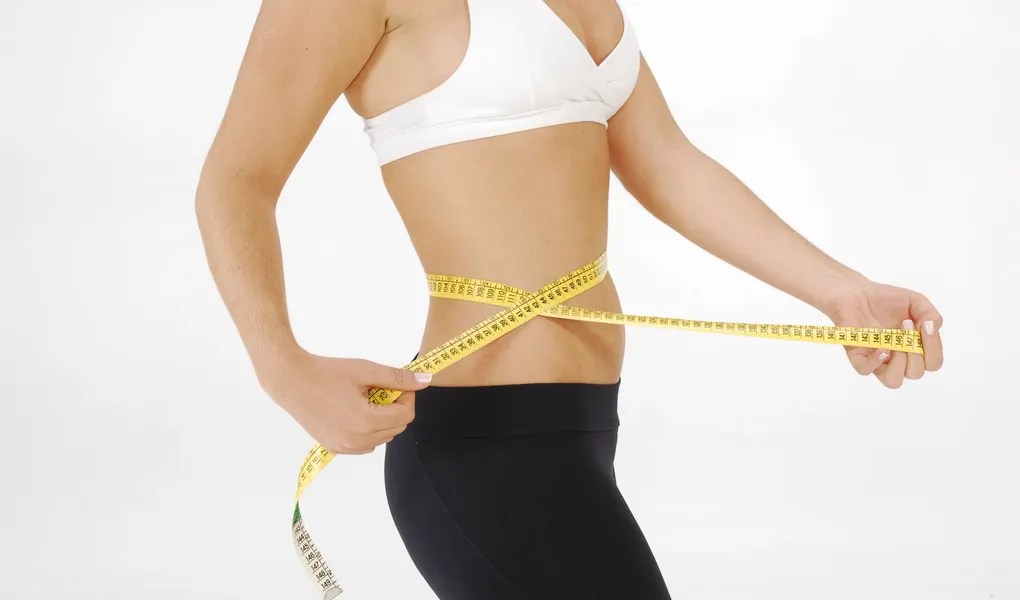
'Can pilates help me lose weight?' is one of the questions I hear most before a first session. And the honest answer is more nuanced than a simple yes or no: pilates really does reshape the body and can even help you lose weight - just not in the way people usually expect.
How many calories pilates actually burns
Let's start with a number that disappoints a lot of people. When the energy cost of pilates was measured directly - through oxygen consumption, not the rough estimates in fitness apps - it turned out to be modest. In a study published in the Journal of Bodywork and Movement Therapies (2021), a mat session burned about 1.9 calories per minute, and a reformer session about 2.6. That's roughly 115-155 calories per hour.
The same study noted another telling detail: blood lactate barely rose after a session. In plain terms, pilates works in a calm, aerobic zone, without the 'burn' that intense cardio produces. It is not a way to torch a lot of calories in an hour, and anyone who promises you otherwise is bending the truth.
And yet the research shows real weight loss
Here's where it gets interesting. Despite that modest calorie burn, a large review leaves no doubt that pilates helps people lose weight. A meta-analysis (Wang et al., 2021, Frontiers in Physiology) pooled studies of adults with overweight and obesity and found that regular pilates significantly reduces body weight, BMI, and body-fat percentage.
The effect was more pronounced in two cases: when the program ran longer (months rather than weeks), and when the participants had obesity specifically - more to lose to begin with. In other words, the longer the practice and the larger the starting excess, the more visible the result.
So we have a paradox: pilates burns few calories, yet weight comes down. Let's unpack why.
Why it works despite the modest calorie burn
The main reason isn't how many calories burn during the session itself - it's that people actually keep showing up for pilates. It's a format you can sustain for years: it doesn't overload the joints, doesn't exhaust you, doesn't make you dread the workout. And the consistency you can maintain always beats the intensity you'll quit in a month.
Then a chain reaction kicks in. Someone who starts moving usually becomes more active outside class too: they walk more, they say yes to a stroll or a swim more easily. Body awareness improves, and with it, attention to how and how much they eat. That's exactly why longer programs produced bigger effects in the studies: it isn't the single session doing the work, it's the lifestyle that builds up around it.
What pilates does not do - and it's worth admitting honestly
That same meta-analysis has a second half to its conclusion that rarely gets quoted. Pilates reliably lowered weight and fat, but it did not produce a meaningful gain in lean muscle mass and barely changed waist circumference. So the idea that 'pilates will build muscle that burns fat around the clock' is an overstatement.
This isn't a flaw in the method - it's a matter of honest expectations. Pilates builds core strength, control, and deep-muscle endurance, and it makes the body look toned and collected. But it doesn't work like heavy strength training that adds significant muscle mass. If your goal is specifically to build a lot of muscle, pilates will need a strength-training partner.
The myth of 'belly fat'
The most stubborn myth goes like this: 'do more ab exercises and the belly will disappear.' Unfortunately, no. In a telling experiment (Vispute et al., 2011), people did ab exercises specifically, five days a week for six weeks - and saw no reduction in abdominal fat and no weight loss compared with those who did nothing. The muscles under the fat got stronger, but the fat itself stayed put.
Spot reduction doesn't exist. The Hundred and the plank don't 'melt' fat right where you're working - the body spends fat evenly, and only when there's an overall calorie deficit. So promises of a 'flat stomach in 10 minutes a day' are marketing, not physiology.
The main lever is the plate, not the mat
The entire evidence base on weight loss says so, and pilates is no exception. In a large review (Swift et al., 2014), physical activity on its own, without changing the diet, produced only modest weight loss - on average up to two kilograms. A calorie deficit is far easier to create at the table than to 'work off' through movement: one small dessert eats up an hour of pilates.
But that same review stresses something equally important: movement is decisive for NOT regaining the weight. People who stay active are far less likely to return to their previous numbers. That's where pilates is genuinely strong - it turns activity into a durable habit rather than a one-off heroic push before summer.
How I build a routine for reshaping the body
In my experience the best results come from a simple combination, not heroics. Two or three pilates sessions a week as the foundation of strength, posture, and control. Plus a daily 20-30 minutes of walking or light cardio - that's what adds the calories pilates lacks. And nutrition with a small deficit as the main lever on weight.
The realistic timeline I give clients is this: the first one to two weeks bring more energy and lightness as the body 'wakes up.' By four to six weeks, measurements and the way clothes fit start to change, even if the scale has barely moved. And truly visible changes in shape, tone, and endurance arrive after eight to twelve weeks of consistency. It isn't fast - but it's stable, with no rebound.
The takeaway
Does pilates work for weight loss? Yes - not as a calorie furnace, but as a durable habit that draws you into movement and makes an active lifestyle enjoyable. On its own it burns little, builds no mountains of muscle, and removes no fat locally. But the research shows real reductions in weight, BMI, and fat with regular long-term practice - especially if you add daily activity and get your nutrition in order.
That's why I never promise 'minus ten kilograms with pilates.' I promise a format you won't quit - and that, not some single magic exercise, is what reshapes the body over the long run.
Sources
- The exercise intensity of Pilates: energy expenditure, lactate, and load in mat and apparatus sessions, Journal of Bodywork and Movement Therapies, 2021
- Wang et al. Pilates for overweight or obesity (meta-analysis), Frontiers in Physiology, 2021
- Vispute et al. The effect of abdominal exercise on abdominal fat, Journal of Strength and Conditioning Research, 2011
- Swift et al. The role of exercise and physical activity in weight loss and maintenance, Progress in Cardiovascular Diseases, 2014
- WHO. Guidelines on physical activity and sedentary behaviour, 2020