
Pilates vs Yoga: What's the Difference and Which to Choose
Comparing goals, exercises, and how each practice feels in specific situations - and when to choose one over the other, or combine both.
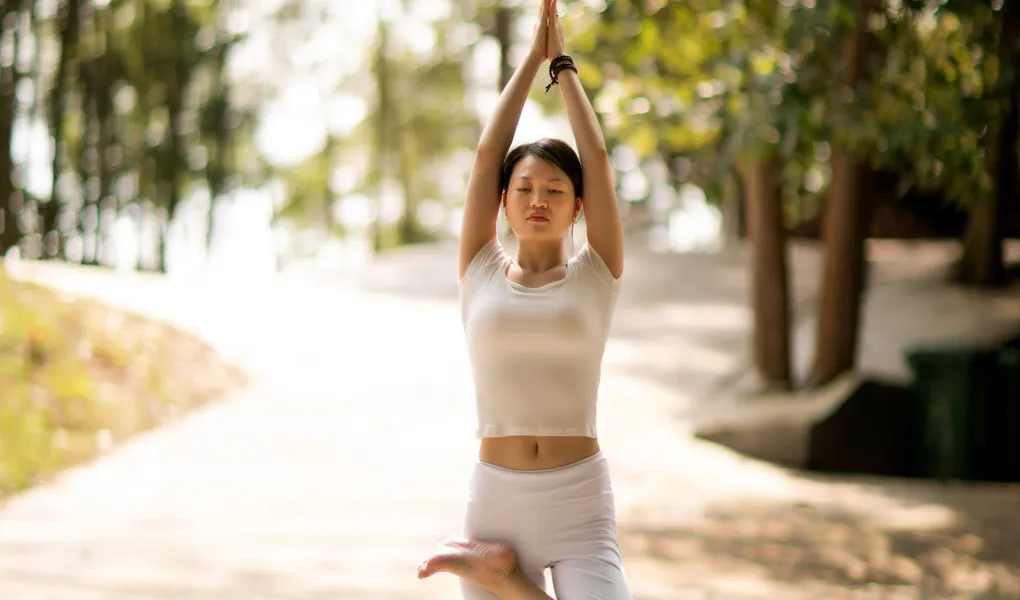
'Pilates or yoga?' is a question I hear almost every week, and people often expect me to start arguing that one is better than the other. I won't. Yoga is a beautiful practice with a history spanning millennia, and it offers things pilates does not. So it's more honest to talk not about 'which is better,' but about 'which for what goal.'
Shared roots, different goals
At first glance the two look alike: both are gentle, mindful, work with the breath, and need no heavy equipment. But their nature differs. Yoga took shape over centuries as a practice that unites body, breath, and mind, with an emphasis on flexibility, calm, and inner balance.
Pilates is younger - about a hundred years ago Joseph Pilates created it as a system of controlled strengthening. At its center are the deep core muscles, precision of movement, and stability. So the very 'DNA' of each practice carries a different focus: yoga leans toward mobility and calming down, pilates toward strength, control, and support.
Where yoga is strong - and it deserves honest credit
I'll start with yoga, because its strengths are real and well documented. It shines most where the body and nervous system need calm. A meta-analysis (Brinsley et al., 2021, British Journal of Sports Medicine) found that yoga noticeably reduces symptoms of depression, and the effect was greater in those who practiced more often.
So if your main need is to exhale after a demanding stretch, lower anxiety, work on flexibility, and learn to calm yourself through breathing, yoga is a wonderful and evidence-backed choice. I genuinely recommend it to some of my clients for exactly these reasons.
Where pilates has a direct edge
Where the goal shifts from calming down to strength, control, and stability, pilates answers more precisely. It's structured and progressive: load builds step by step, and every exercise has clear technique and works the deep muscles that hold the spine.
The research shows this too. A systematic review (Pinto et al., 2022, Heliyon) compared pilates with other forms of exercise and concluded that for building strength it is not inferior to them, and in places even superior. And a meta-analysis (Barker et al., 2015) showed a marked improvement in balance - one of the key components of a stable, confident body.
And what about the back - the most common reason people come
A topic of its own is lower-back pain from desk work, because that's what people come to me with most often. And here it's important to be honest: both practices work. The most reliable evidence comes from so-called Cochrane reviews - where independent researchers pool dozens of separate studies and weigh them together, which is why evidence-based medicine treats such reviews as one of the most reliable sources. The review on yoga (Wieland et al., 2017) found a small reduction in pain, while a dedicated review on pilates (Yamato et al., 2015) found that it reduces pain and improves function better than minimal intervention. Head to head, neither practice has a clear advantage over the other.
But there's a nuance of mechanism. When the back hurts specifically because of weak deep stabilizers and too much sitting, pilates strikes closer to the cause: it deliberately trains the muscles that keep the spine in a stable position. Yoga works more through mobility and relaxation. Both roads lead to relief, but for a 'desk back' pilates is usually the shorter one.
How to choose for your goal
I advise my clients to start not from fashion but from the need. Need to quiet the mind, release stress, become more flexible - yoga will be wonderful. Want a strong center, upright posture, a stable spine, a back that doesn't ache after the workday, and better balance - pilates answers that more directly.
I'll say it plainly: most people come to me with the second set of goals - a back tired from sitting, a weak center, rounded shoulders. Not because yoga is worse, but because pilates is built for exactly these tasks.
Why you don't have to choose just one
And most important - this isn't a fight that has to have a winner. The two practices complement each other beautifully: pilates gives strength and stability, yoga adds flexibility and recovery. Many of my clients combine the formats across the week - say, two pilates sessions and one yoga session - and get the best of both worlds.
The takeaway
The question isn't 'which is better,' but 'which for what.' Yoga is about flexibility, breath, calm, and mood, with a real evidence base. Pilates is about strength, control, posture, balance, and a direct answer to the 'desk back' most of us live with. If you're unsure and your goal is a strong, stable, pain-free body for everyday life, start with pilates. If you need to exhale and soften, start with yoga. And ideally, leave room in your week for both.
Sources
- Brinsley et al. Effects of yoga on depressive symptoms (meta-analysis), British Journal of Sports Medicine, 2021
- Pinto et al. Is pilates better than other exercises at increasing muscle strength (systematic review), Heliyon, 2022
- Barker et al. Effect of Pilates exercise for improving balance in older adults (meta-analysis), Archives of Physical Medicine and Rehabilitation, 2015
- Wieland et al. Yoga for chronic low back pain (Cochrane review), Cochrane Database of Systematic Reviews, 2017
- Yamato et al. Pilates for low back pain (Cochrane review), Cochrane Database of Systematic Reviews, 2015